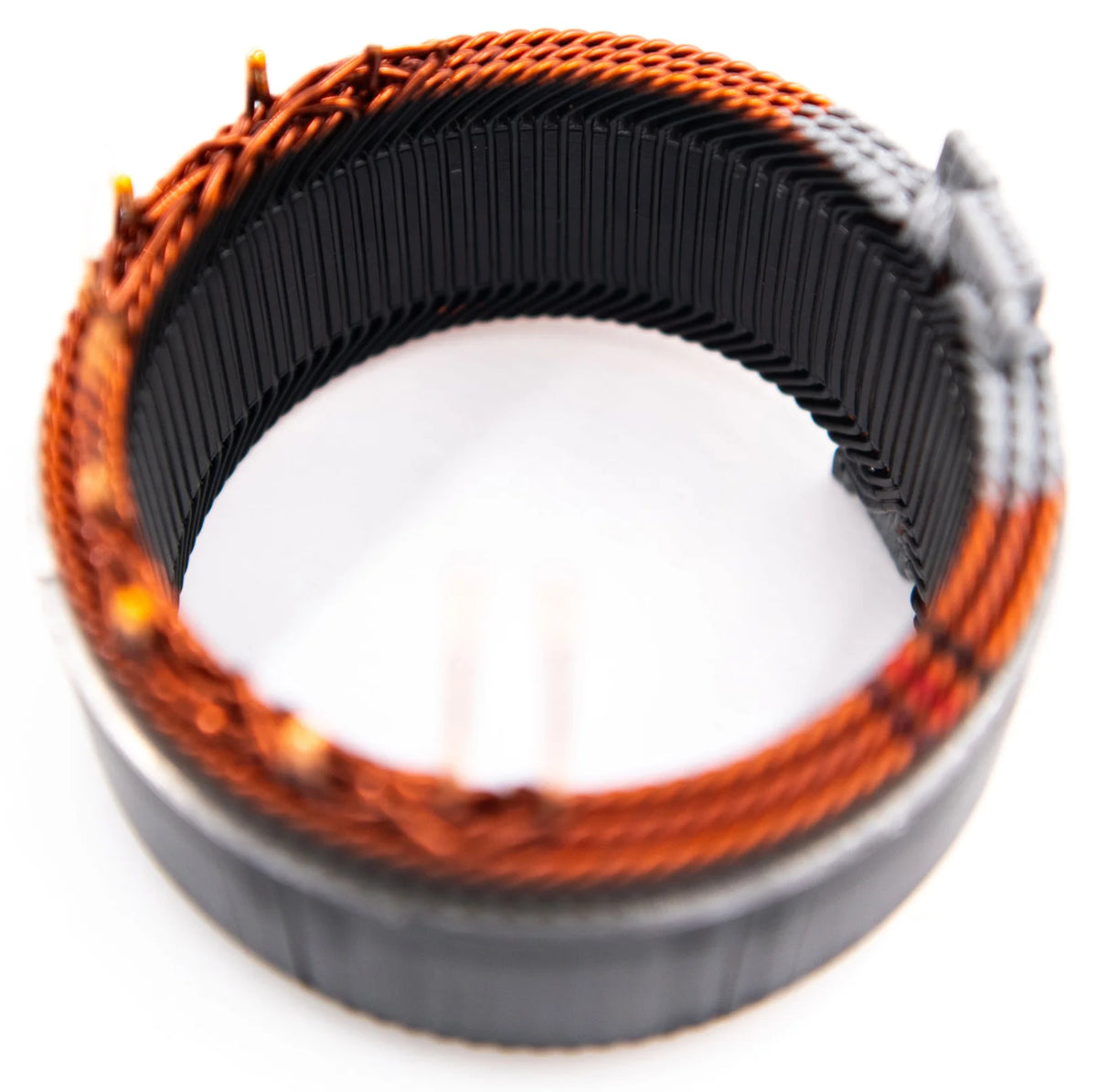
24V 4kW LTO, Isolated Ground, 49mm K6 Pulley Part# 4402
24V 4kW LTO, Isolated Ground, 49mm K6 Pulley Part# 4402
SKU:ARC4402
The ARCO Marine Zeus 4402 is a premium, high-output 24V alternator optimized for massive power delivery at low engine speeds. This specific model features a 3.15-inch Dual Foot (DF315) mount, making it a drop-in upgrade for Yanmar and other common marine propulsion systems. Equipped with Low Turn-On (LTO) technology, it wakes up faster than standard high-output options, continuously generating over 1.4kW (51 Amps) at just under 1,500 alternator RPM. It is the ultimate choice for boaters looking to ditch the noise and maintenance of a separate generator by turning engine idle time into a highly efficient battery charging session.
- Mounting Footprint: 3.15" Dual Foot (DF315 / Common Rail configuration).
- Low Turn-On Tech: Delivers up to 4.2kW of power at an alternator speed of just 3,000 RPM (engine idle with typical pulley ratios).
- Marine-Ready Design: Includes an isolated ground structure and a corrosion-resistant black E-coating finish.
- Pulley Included: Outfitted with a standard 49mm K6 (6-groove) serpentine pulley mounted over a 17mm shaft.
- External Regulation: Requires an advanced external controller (like the ARCO Zeus Bluetooth Regulator) to safeguard and optimize large lithium or AGM banks.
Specifications
Specifications
Unified Core Specifications
System Voltage: 24V Nominal
Technology Type: Low Turn-On (LTO)
Maximum Output: ~144 Amps
Grounding: Isolated Ground (prevents galvanic corrosion)
Included Pulley: 49mm K6 (6-Groove Serpentine)
Shaft Diameter: 17mm
Regulation Type: External Regulation Only
Protective Finish: Corrosion-resistant black E-coating.
Model 4402 Configuration
Part Number: 4402
Mounting Footprint: 3.15-inch Dual Foot (DF315)
Primary Compatibility: Yanmar engines and common marine propulsion systems
Max Nominal Power: 4.2 kW
Idle Performance: 1.4 kW (~51 Amps Hot at 3,000 alternator RPM)
Installation Details
Installation Details
Installation Instructions for 24V 4kW Marine AlternatorPhase
1: Pre-Installation & Safety
Disconnect Batteries: Turn off all battery switches. Disconnect the negative terminals of both starting and house banks.
Verify Alignment: Ensure the 49mm K6 pulley aligns with the engine crankshaft pulley to prevent premature belt wear.
Inspect Belts: Use a high-quality, heavy-duty K6 serpentine belt capable of handling a 4kW load.
Phase 2: Mechanical Mounting
Position Alternator: Place the alternator into the engine's dual-foot (DF315) mounting bracket.
Insert Pivot Bolt: Slide the main pivot bolt through the dual feet. Leave it finger-tight to allow movement.
Attach Tension Arm: Align the adjustment ear with the engine tensioner arm or brackets.
Torque Hardware: Once the belt is tensioned to specification, tighten the pivot bolt and adjustment bolt to engine manufacturer torque ratings.
Phase 3: Electrical Wiring
Positive Output (B+): Connect a heavy-gauge cable from the rear battery post directly to the positive distribution bus or battery switch.
Isolated Ground (B-): Run a matching heavy-gauge ground cable from the dedicated isolated ground terminal to the engine block ground or main negative bus. Do not rely on the chassis mount for grounding.
Field Control: Route the field wire from your external smart regulator to the field terminal on the alternator plug.
Stator/Tachometer: Connect the stator output wire to your engine tachometer input if required for RPM sensing.
Phase 4: System Integration & Testing
Connect Regulator: Plug the wiring harness into the external regulator. Ensure the temperature sensors are attached to both the alternator frame and the battery bank.
Reconnect Batteries: Reattach all negative battery terminals and turn on the main battery switches.
Program Regulator: Configure the external smart regulator with the correct charging profile for your specific battery chemistry.
Engine Test: Start the engine at idle. Verify that the alternator wakes up via the LTO function and check for smooth belt operation without vibration.
Pelagic Power Tip
Pelagic Power Tip
Low stock: 2 left
Couldn't load pickup availability